Police Aviation Rapid Scramble Workflow: From Call‑Out to Launch in Under 3 Minutes
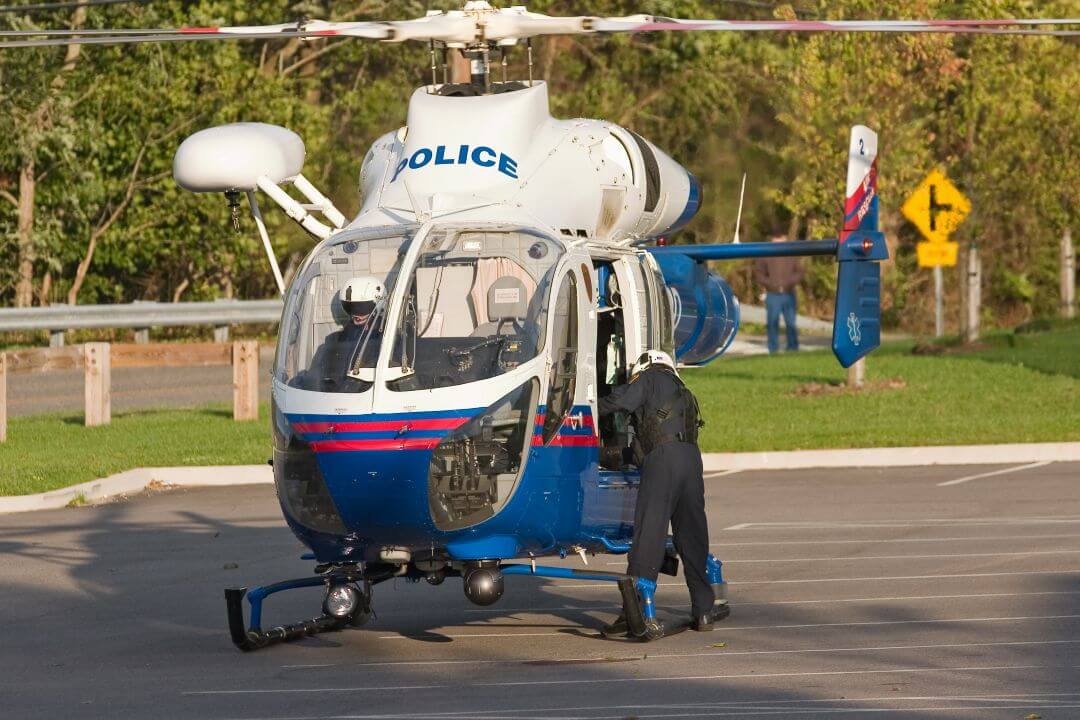
For law enforcement air support units, the clock starts before the helicopter ever leaves the ground.
- A call comes in.
- A pursuit is moving fast.
- A search area is expanding.
- A tactical team needs overwatch.
- A missing person case is turning critical.
In those first few minutes, the difference between “ready soon” and “airborne now” can directly affect officer safety, public safety, and mission outcome.
That’s why a repeatable rapid launch workflow matters.
In this article, “rapid scramble” refers to the ground-to-launch process that begins when a police aviation unit receives a call-out and ends when the aircraft is positioned, checked, and ready for takeoff. The goal is not to rush safety-critical procedures, but to remove avoidable delays from aircraft movement, staging, power support, and crew coordination.
For police aviation teams, scramble readiness is not just about pilot response time or aircraft performance. It’s also about what happens inside the hangar, on the apron, and around the aircraft before the rotors turn. Every movement, handoff, checklist item, and piece of ground support equipment should support one goal: getting the aircraft positioned, powered, checked, and launched safely with minimal delay.
A well-designed police helicopter scramble towing SOP (standard operating procedure) helps remove guesswork from the process. It gives the crew a shared playbook for call-out response, helicopter movement, pre-flight support, and launch coordination.
When paired with the right ground handling equipment, that SOP can help departments create more predictable response times without overloading personnel.
Why Police Rapid Scramble Readiness Starts on the Ground
In law enforcement aviation, most people focus on the airborne mission: patrol support, suspect tracking, search and rescue, SWAT overwatch, perimeter control, and traffic incident response.
But before any of that can happen, the aircraft has to move.
For many air support units, the helicopter may be positioned inside a hangar for protection, security, maintenance access, or weather readiness. When a call comes in, crews may need to move the aircraft from a tight hangar space to the launch area quickly and safely. That sounds simple until you factor in real-world conditions:
- Limited hangar clearance
- Rotor arc awareness
- Tail boom positioning
- Mission equipment (such as FLIR, cameras, searchlights, or radar)
- Night operations
- Extreme weather
- Reduced staffing
- The pressure of an active incident
Traditional ground handling methods can introduce friction into the workflow. Manual pushing, tow bars, bulky tractors, or multi-person movement routines can slow response and increase risk. In a scramble scenario, the aircraft movement process should be controlled, repeatable, and easy to execute.
That is where Chopper Spotter supports law enforcement teams. Our police aviation ground support equipment is designed to help streamline operations, enable faster deployments, and avoid interference with mission-critical equipment such as FLIR, radar, and searchlights thanks to its low-profile, rear-loading approach.
The Goal: Call-Out to Launch in Under 3 Minutes
Not every department will have the same facility layout, staffing model, aircraft, mission profile, or launch procedure. For some units, a sub-three-minute launch may already be familiar. For others, it may be an aspirational benchmark used for workflow improvement.
Either way, the objective is the same: reduce avoidable delay while maintaining safety and control.
A strong police helicopter scramble towing SOP should be built around four principles:
- Predictability: Every person knows the sequence.
- Minimal crew requirement: The aircraft can be moved efficiently without waiting for extra personnel.
- Controlled movement: Helicopter positioning is precise, especially in tight spaces.
- Launch readiness: Power, communication, and safety checks are supported without unnecessary equipment changes.
When those principles are in place, police aviation services can respond with greater confidence and less operational friction.
A Sample Rapid Scramble Workflow for Police Aviation Units
NOTE: The following workflow is a practical framework that air support units can adapt to their own aircraft, facilities, safety standards, and departmental protocols. It is not a replacement for your approved procedures, OEM guidance, or pilot-in-command authority. Instead, think of it as a structure for building a more consistent ground-to-launch routine.
0:00–0:20: Call-Out Received and Crew Roles Confirmed
The scramble begins when dispatch, command, or the watch desk activates the air unit.
In the first 20 seconds, the team should confirm:
- Mission type
- Launch priority
- Pilot and tactical flight officer assignments
- Aircraft selection
- Hangar door status
- Ground movement responsibility
- Initial communication channel
The key is avoiding confusion. In a high-pressure call-out, no one should be asking, “Who is moving the aircraft?” or “Is the tug ready?”
That responsibility should already be defined in the SOP.
For smaller police aviation teams, this is especially important. Many departments do not have unlimited personnel available during overnight shifts, holidays, or overlapping incidents. A single-operator ground handling process can reduce dependency on extra staff and help the crew move faster without compromising safety.
0:20–0:45: Hangar Path Cleared and Aircraft Access Verified
Before any aircraft movement begins, the launch path must be clear.
That includes:
- Hangar door opening
- Floor path clearance
- Tool and cart removal
- Blade and tail clearance awareness
- Apron access confirmation
- Personnel positioning
A clean hangar layout makes this step faster. If the aircraft path is cluttered or equipment is stored inconsistently, the scramble slows before it really starts.
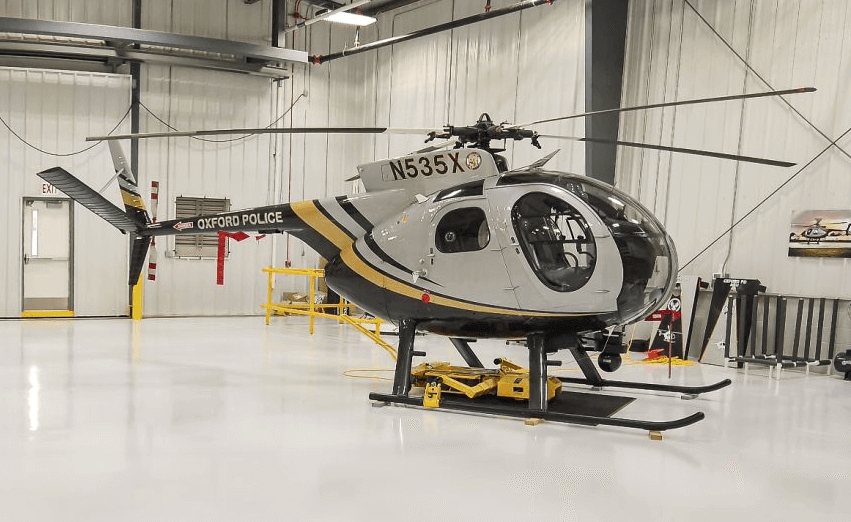
This is where routine hangar discipline pays off. Marked movement paths, defined equipment zones, proper lighting, and accessible ground support tools all contribute to safer, faster operations. Our helicopter hangar checklist is a helpful resource for evaluating layout, equipment placement, lighting, power access, and workflow improvements that support mission readiness.
For police units, this step should also account for mission equipment. Under-mounted FLIR systems, cameras, searchlights, and other sensors must remain protected during movement. Chopper Spotter’s low-profile design and rear-loading approach are specifically valuable here because they help avoid interference with equipment mounted beneath or around the aircraft.
0:45–1:20: Attach the Chopper Spotter and Lift
Once the path is clear, the operator attaches the Chopper Spotter to the aircraft.
Chopper Spotter is designed for rear attachment through the skids. The operator rolls the unit beneath the helicopter from the rear, connects the yokes to the wheel attachment points, uses the wireless handheld controller, and raises the helicopter for movement. See how the Chopper Spotter process works.
Featured police aviation fit: For many air support units, the Model 4 is the best fit for heavier police helicopters, mixed fleets, and departments that need maximum lift capacity, durability, and auxiliary power support.
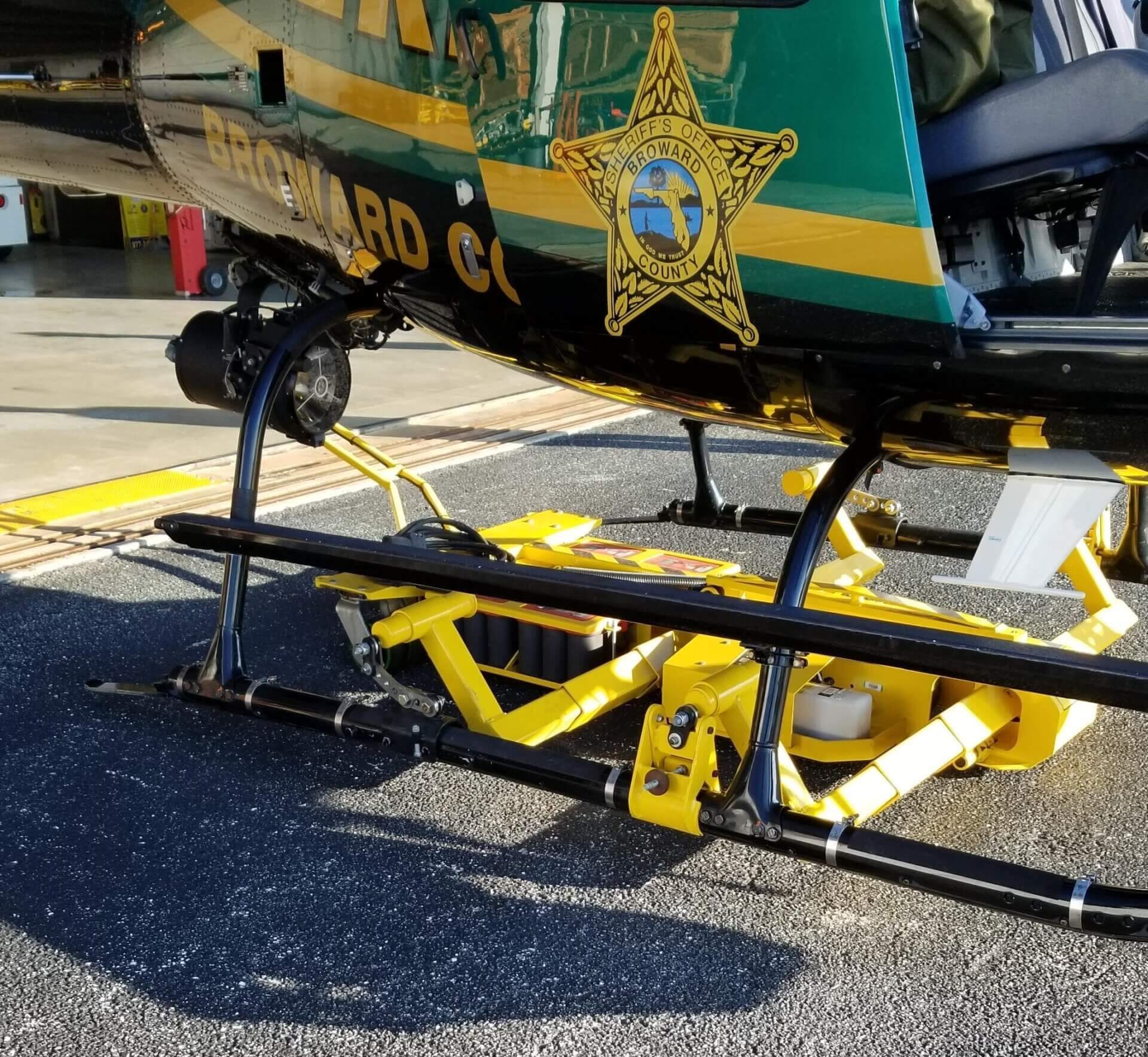
This matters for a rapid scramble because the movement process is simple, controlled, and repeatable.
Instead of coordinating a group push or positioning a larger towing vehicle, a trained operator can control the lift and movement with precision. That reduces the number of moving parts, both literally and operationally.
In police aviation, fewer unnecessary steps can make a real difference. A scramble workflow should not depend on finding extra hands or repositioning multiple pieces of support equipment. It should be built around equipment that is ready when the crew is ready.
1:20–2:00: Move From Hangar to Launch Position
This is the point where precision and control matter most.
The aircraft moves from its hangared position to the launch area, helipad, or apron staging point. The operator must maintain full awareness of the rotor system, tail boom, skid path, hangar door clearance, and surrounding personnel.
In tight law enforcement hangars, controlled maneuverability is essential. Air support units often operate in facilities designed around limited space, shared maintenance areas, security requirements, or legacy infrastructure. A compact ground handling system gives the operator more control and reduces the need for wide turns or complicated repositioning.
Chopper Spotter’s wireless handheld control supports single-operator movement, while the rear-loading design helps stabilize aircraft handling during ground transport. That combination is especially helpful in a police helicopter scramble towing SOP because it gives teams a consistent process for moving the aircraft out quickly and safely.
A strong SOP should define:
- Standard aircraft parking position
- Preferred movement path
- Backup movement path
- Operator standing position
- Tail clearance requirements
- Stop points
- Night movement lighting procedures
- Weather-related precautions
The more clearly those elements are defined, the less the crew has to improvise under pressure.
2:00–2:30: Lower, Disconnect, and Clear Ground Equipment
Once the aircraft reaches the launch position, the operator lowers it safely, disconnects the Chopper Spotter, and clears the unit from the aircraft movement zone.
This step should be simple, but it should never be rushed carelessly. Ground equipment must be positioned where it does not interfere with rotor startup, emergency vehicle access, personnel movement, or future recovery operations.
A good rapid launch SOP should include an assigned storage or staging location for the Chopper Spotter after disconnect. If the unit is always returned to the same safe location, crews do not waste time deciding where to put it during the most active part of the launch sequence.
This is also where compact design can support facility efficiency. Chopper Spotter ground handling units take up minimal floor space and can even be stored directly underneath the helicopter, helping aviation teams maximize hangar space when not in active use.
For departments balancing aircraft, patrol vehicles, maintenance carts, tools, and mission gear, that smaller footprint can make daily operations much easier.
2:30–3:00: Final Checks, Power Support, and Launch
The final seconds of the scramble are all about aircraft readiness.
Depending on the aircraft, mission, and department procedures, this window may include:
- Pilot pre-start checks
- Tactical flight officer equipment checks
- Radio confirmation
- Mission system power-up
- Lighting confirmation
- Weather or route update
- Final clearance from ground personnel
Reliable power support can also play a role in scramble readiness. Chopper Spotter’s built-in GPU can act as a portable APU, supplying power to helicopter systems during pre-flight checks and maintenance when paired with an APU power cord. The Model 4 and Model MS offer auxiliary power receptacles as standard, while the Model E can be configured with an optional APU receptacle.
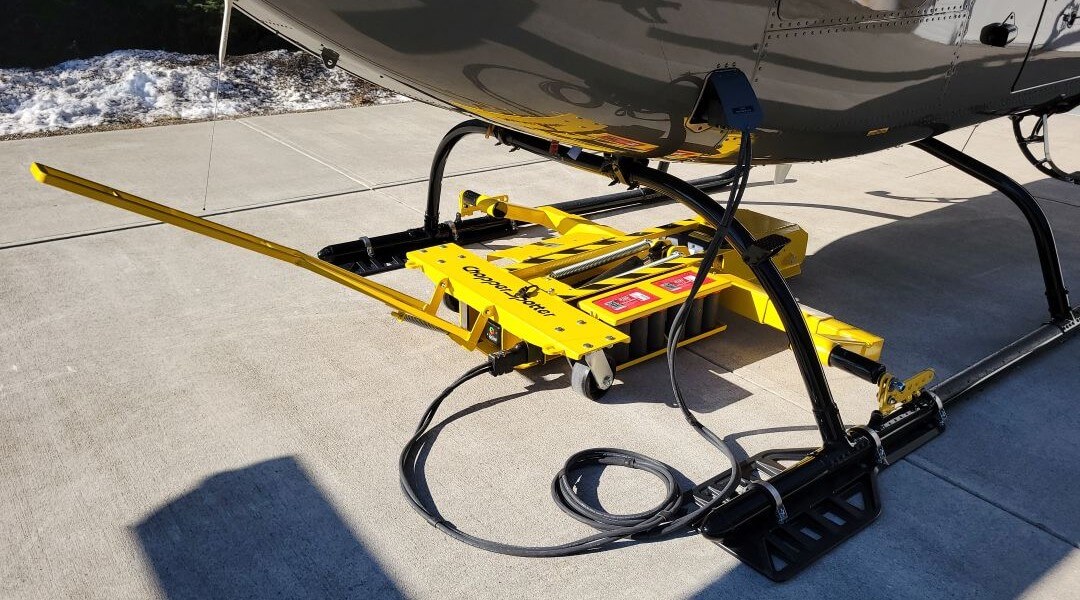
While our helicopter GPU readiness article is written for EMS operations, the underlying readiness concept applies to other high-tempo aviation teams as well. A helicopter GPU can help support repeated starts, reduce battery strain, and improve turnaround time in mission-driven environments. Police aviation units can review the operational principles and adapt the ideas to their own maintenance and launch procedures.
For law enforcement air support, the benefit is straightforward: when the call comes in, the aircraft should not be waiting on power, positioning, or ground support coordination.
Ready to Strengthen Your Air Support Launch Workflow?
For police aviation units, a repeatable rapid scramble workflow can help reduce avoidable delays, protect aircraft and mission equipment, and give crews more confidence during the most time-sensitive calls.
Chopper Spotter helps law enforcement aviation teams move aircraft with greater control, efficiency, and confidence. Whether your unit is refining its scramble process, upgrading hangar equipment, or looking for a safer way to support rapid launch operations, Chopper Spotter delivers durable, U.S.-built ground handling solutions designed for real-world police aviation demands.
Explore our police helicopter hangaring solutions or request a quote to find the right model for your air support unit.
Because when a patrol unit needs eyes overhead, when a search area is growing, or when a tactical team needs airborne support, the ground operation should never be the bottleneck.