The Helicopter Hangar Checklist: Essentials Every Operator Needs

A helicopter hangar is more than a place to park aircraft. It’s where maintenance occurs, safety standards are upheld, crews prepare for missions, and millions of dollars’ worth of aviation assets are protected.
Whether you operate one helicopter or an entire fleet, having the right helicopter hangar equipment in place directly impacts your efficiency, safety, and long-term operating costs.
Why Your Hangar Setup Matters More Than You Think
Many operators invest heavily in aircraft but underestimate the impact of their hangar on reliability, uptime, and safety. Poor layouts, outdated equipment, and cluttered workflows can slow maintenance, increase the risk of accidents, and even damage the aircraft.
Whether you’re working in a small private helicopter hangar or a full-scale HEMS or law-enforcement facility, your hangar should be designed to support:
- Fast aircraft movement
- Safe maintenance operations
- Clean, organized workflows
- Protection from weather and corrosion
The Helicopter Hangar Checklist
From helicopter hangar design and layout to daily-use tools and ground support equipment, this helicopter hangar checklist covers everything operators need to create a safer, more productive hangar environment.
1. Proper Helicopter Hangar Dimensions & Layout
Before any equipment enters the space, your hangar needs to be sized and designed correctly. Your helicopter hangar design should allow the aircraft to move safely without tight turns, blind spots, or risk of blade or skid contact. If your aircraft barely fits, every movement becomes risky.
Key helicopter hangar dimensions to consider:
☑️ Door height and width to accommodate rotor systems and tail booms
☑️ Clear floor space for turning, positioning, and maintenance access
☑️ Ceiling height for hoists, lighting, and blade clearance
☑️ Taxi-in space for easy entry and exit
To learn more about effective hangaring, check out these 5 Tips for Safely Moving a Helicopter on the Ground.
2. Proper Ground Handling Equipment
When moving helicopters inside a hangar, you need the right tools to do it safely. Many operators still rely on tow bars, dollies, or even good-old-fashioned manpower to push helicopters around. These methods are slow, dangerous, and inconsistent—especially in tight spaces!
A professional hangar needs:
☑️ A powered helicopter tug for precise movement
☑️ Compact turning capability for tight hangars
☑️ Single-operator control to reduce staffing requirements
This is where Chopper Spotter becomes essential. Unlike bulky tractors or unsafe dollies, a Chopper Spotter allows one operator to move a helicopter with total control, even in confined spaces. It dramatically reduces the risk of hangar rash, blade strikes, and personnel injury.
Want to see how the top options stack up? This article compares 3 Different Types of Helicopter Ground Handling Equipment.
3. Floor Markings & Safety Zones
Visual guidance is a major part of helicopter hangar safety. These markings reduce confusion, speed up positioning, and prevent accidents during tight maneuvering.
Your hangar should include:
☑️ Taxi and push paths
☑️ Rotor arc clearance zones
☑️ No-step and no-park areas
☑️ Emergency egress paths
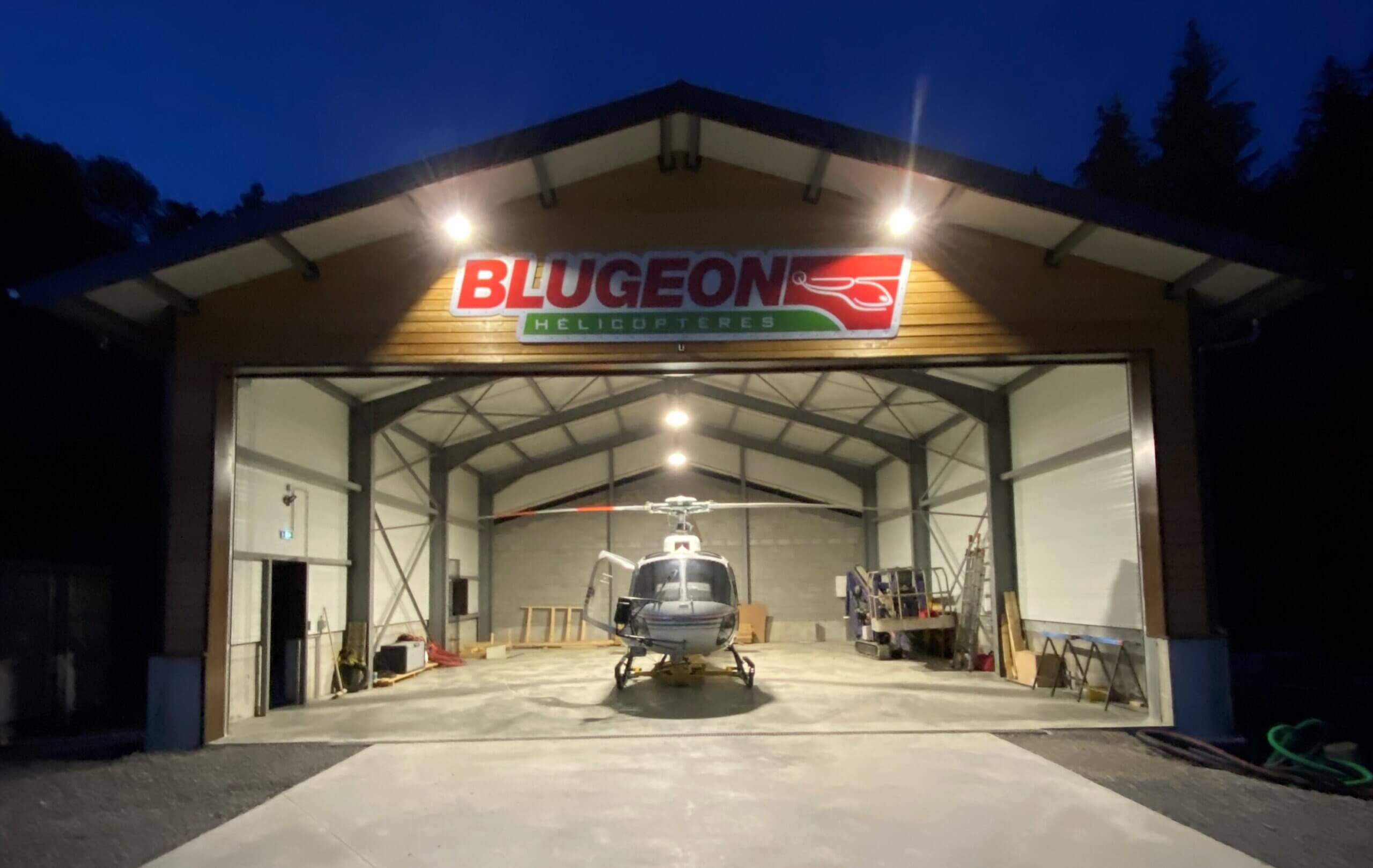
4. Lighting Designed for Aviation Work
General warehouse lighting is not enough. Poor lighting leads to missed cracks, skipped fasteners, and unnecessary risks.
A proper helicopter hangar needs:
☑️ Bright overhead lighting
☑️ Low-glare maintenance lights
☑️ Portable task lighting for inspections
☑️ Exterior apron lighting for night operations
5. Power, Air, & Charging Stations
Modern hangars increasingly integrate power into the workflow. If your helicopter tug includes a built-in GPU (like certain Chopper Spotter configurations), you eliminate extra equipment and streamline operations.
Every helicopter hangar equipment list should include:
☑️ Shore power hookups
☑️ Battery charging stations
☑️ Ground power units (GPU)
☑️ Compressed air lines
☑️ Backup generators
Still unconvinced? Here are 3 Reasons to Buy a Helicopter Tug With a Built-in Ground Power Unit.
6. Maintenance & Tool Storage Systems
A clean hangar is a safe hangar. Disorganized hangars slow down maintenance and increase the risk of foreign object damage (FOD).
You need:
☑️ Shadow-board tool walls
☑️ Rolling maintenance carts
☑️ Part storage cabinets
☑️ Secure hazardous material lockers
☑️ Logbook and document stations
For fleet operators, this matters even more. To learn more, check out these Tips for Maintaining a Helicopter Fleet.
7. Fire Suppression & Emergency Equipment
Aviation fuel and electrical systems demand professional-grade safety systems. These systems protect not just your aircraft, but your crews and facilities as well.
Every helicopter hangar checklist should include:
☑️ Fire extinguishers rated for aviation fuel
☑️ Foam or water suppression systems
☑️ Emergency shut-off switches
☑️ Spill kits
☑️ First-aid and trauma kits
8. Weather Protection & Climate Control
Temperature and humidity directly affect aircraft components. A climate-controlled helicopter hangar extends the life of your aircraft and reduces maintenance costs.
Your helicopter hangar design should account for:
☑️ Ventilation for exhaust and fumes
☑️ Dehumidification to prevent corrosion
☑️ Heating for cold climates
☑️ Cooling for avionics protection in areas of extreme heat
9. Security & Access Control
Helicopters are high-value assets. Security failures don’t just result in theft—they can create unnecessary safety hazards.
Your hangar should include:
☑️ Controlled access points
☑️ Camera systems
☑️ Keycard or biometric entry
☑️ Lockable tool and parts storage
10. Space for Future Growth
Many operators design a hangar for today and outgrow it within a few years. Scalable layouts keep you from rebuilding later.
Smart helicopter hangar design allows room for:
☑️ Larger aircraft
☑️ Additional ground equipment
☑️ Maintenance expansion
☑️ New technology
Final Thoughts
A modern helicopter hangar is not just a shelter—it’s a working environment that directly affects safety, efficiency, and profitability. By following this helicopter hangar checklist and investing in the right equipment, operators can:
- Reduce accidents
- Improve maintenance workflows
- Extend aircraft life
- Increase mission readiness
And when it comes to moving helicopters inside that hangar, nothing makes a bigger difference than having the right tug. If your current setup involves too much manpower, too much risk, or too much frustration—it’s time to upgrade.
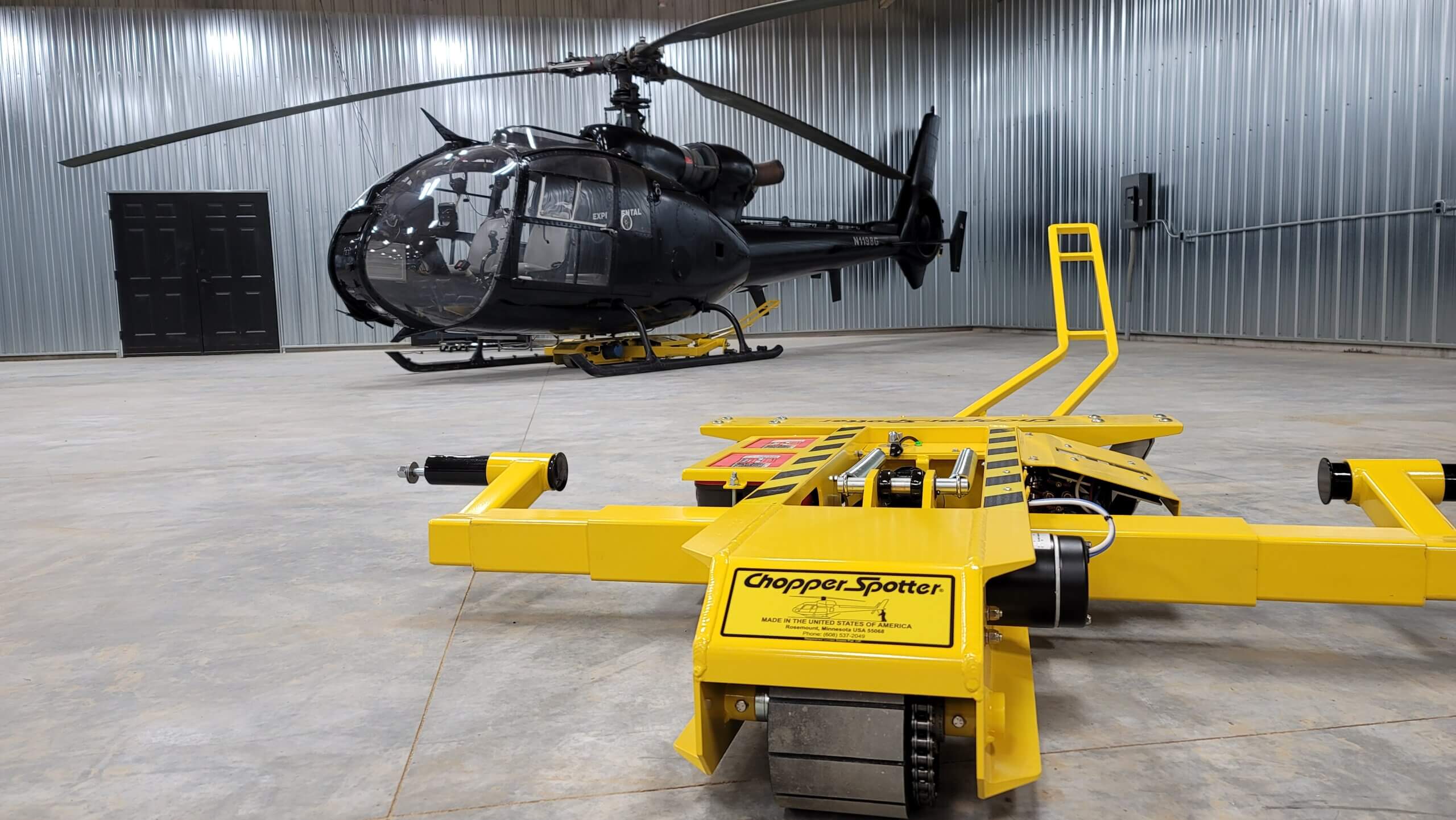
Since 1989, Chopper Spotter has provided world-leading ground-handling solutions from our facility right here in the U.S. For anyone with a helicopter, from hospitals and police departments to military bases and private operations, we deliver total on-the-ground control so you can move and position your aircraft exactly as you need to.
Request a quote today to start experiencing the ease and maneuverability of the industry’s best ground-handling equipment.